A journalist of fifty years standing offers a personal and independent assessment of the often troubled relationship between public figures and the British news media.
My aim is to try to monitor events and issues affecting the ethics of journalism and the latest developments in the rapidly-changing world of press, television, radio and the Internet.
Expect too an insight into the black arts of media manipulation. So spin-doctors, Beware!
Corporate public relations executives for the likes of Starbucks, Amazon and Google are waiting anxiously to discover what fresh humiliation might be in store in the backlash which has followed the revelations about off-shore schemes used to limit their liability to UK corporation tax.
Ever since top directors suffered the indignity last November of being pilloried as tax avoiders at a hearing of the House of Commons Public Accounts Committee, the tax affairs of leading US multi-nationals have become a hot topic for debate.
An indication of the government’s course of action is unlikely before the Chancellor of the Exchequer George Osborne delivers his Budget next month (20.3.2013) but MPs have the ability to sustain their assault rather than rest of their laurels.
A chance encounter with Margaret Hodge, the fiery chairman of the House of Commons Public Accounts Committee, did not suggest the corporate pr world has much to be concerned about. To my surprise she seemed to be indicating that the committee had adopted a wait-and-see position rather than keeping up the momentum by recalling the directors for another parliamentary grilling.
Among the seventy or so broken pledges which were to be slipped out “without any fanfare” on a Whitehall website was the coalition government’s unfulfilled pledge to reduce the number of politically-appointed special advisers.
The revelation that David Cameron’s closest advisers were in precisely the same mind-set as the spin doctors who worked for Tony Blair a decade earlier was a powerful reminder of a continuing obsession with media manipulation.
A Downing Street discussion paper giving advice on how to avoid the publication of “unhelpful stories” and “unfavourable copy” mirrored Jo Moore’s infamous edict after the 9/11 attack on the World Trade Centre that “it’s now a very good day to get out anything we want to bury”.
Clearly the presentation of the coalition’s mid-term review had been a cause of considerable anxiety within the Prime Minister’s office and the restricted advice notice says that while it was possible to explain why some promises had not been proceeded with, this did not apply to “some of the abandoned pledges e.g. numbers of special advisers.”
What is perhaps so ironic about this classic illustration of the spin doctors’ compulsion to want to “bury bad news” is that the adviser responsible for publicising the gaffe should, like David Cameron, have been one of the notorious “Patten’s Pups” from the Conservative Party’s ultimately victorious campaign in the 1992 general election.
While all the post-Leveson skirmishing has been about newspaper editors trying to stitch up a deal with the government on press regulation, there is other unfinished business from the Leveson Inquiry which will require attention in the Prime Minister’s New Year in tray.
Although woefully inadequate, the judge did make a series of recommendations designed to strengthen the Ministerial Code and to ensure greater transparency in future about meetings between politicians and media owners, editors and senior executives.
In the wake of the outrage over the phone hacking scandal in July 2011, David Cameron did ask ministers publish a quarterly declaration of all such meetings – ‘regardless of the nature of the meeting.’
But the Prime Minister and his colleagues made a mockery of the need for greater transparency because except for identifying who, when and where they met the lists gave no hint of the purpose or the outcome of their deliberations. Cameron used the catch-all term ‘general discussion’ alongside eight of his entries for meetings with Rupert or James Murdoch and other News International executives.
An exclusive Christmas poem written by the broadcaster and former Independent MP Martin Bell – and a star appearance by the BBC presenter Kate Silverton and her baby daughter – were two of the highlights of the Journalists’ Charity’s annual Christmas carol concert.
St Bride’s Church, just off Fleet Street, was packed for one of the charity’s most popular social events (17.12.2012) which once again was hosted by the communications consultancy Luther Pendragon.
In his address, Bill Hagerty, the charity’s chairman, predicted that the vast majority of British journalists had the resilience to throw off a tarnished year and once again become the ‘envy of the rest of the world’.
Martin Bell’s poem, written specially for the service, wished Christmas-tide good will to ‘bloggers, blaggers and to hackers and to all who work with pen and quill’.
Mr Hagerty’s reading of the poem – a surprise contribution by one of the charity’s prominent supporters – was preceded by another show-stealing moment when Clemency, the one-year-old daughter of the BBC presenter Kate Silverton, looked on as her mother joined other distinguished journalists in giving the readings.
One of Lord Justice Leveson’s most troubling conclusions was that he found nothing which gave “rise to any legitimate public concern” about the way information flows from the state to the press. He thought the interaction between politicians and newspapers was in “robust good health.”
But the report and recommendations of the Leveson Inquiry (29.11.2012) fly in the face of reality. The judge failed to come to terms with ways in which the government of the day can try to manipulate the news agenda with Conservative – or Labour – supporting newspapers.
In delivering his recommendations, Leveson criticised the newspapers for having been so active in lobbying ministers in advance of publication of his own report – and in arguing their case so vociferously against state regulation of the press.
But his pained rebuke was a reflection of the contradictions in his conclusions. The image of Leveson recommendations turning Britain back three hundred years to the “dark ages” of a licensed press (Daily Mail) – by the judge having the temerity to suggest legislation to underpin independent regulation – was a classic illustration of the power of campaigning journalism – a campaign being waged to the mutual advantage of press proprietors and Conservative politicians.

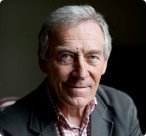 A journalist of fifty years standing offers a personal and independent assessment of the often troubled relationship between public figures and the British news media.
 Corporate public relations executives for the likes of Starbucks, Amazon and Google are waiting anxiously to discover what fresh humiliation might be in store in the backlash which has followed the revelations about off-shore schemes used to limit their liability to UK corporation tax.
 Among the seventy or so broken pledges which were to be slipped out “without any fanfare” on a Whitehall website was the coalition government’s unfulfilled pledge to reduce the number of politically-appointed special advisers.
 While all the post-Leveson skirmishing has been about newspaper editors trying to stitch up a deal with the government on press regulation, there is other unfinished business from the Leveson Inquiry which will require attention in the Prime Minister’s New Year in tray.
 An exclusive Christmas poem written by the broadcaster and former Independent MP Martin Bell – and a star appearance by the BBC presenter Kate Silverton and her baby daughter – were two of the highlights of the Journalists’ Charity’s annual Christmas carol concert.
 One of Lord Justice Leveson’s most troubling conclusions was that he found nothing which gave “rise to any legitimate public concern” about the way information flows from the state to the press. He thought the interaction between politicians and newspapers was in “robust good health.”