A journalist of fifty years standing offers a personal and independent assessment of the often troubled relationship between public figures and the British news media.
My aim is to try to monitor events and issues affecting the ethics of journalism and the latest developments in the rapidly-changing world of press, television, radio and the Internet.
Expect too an insight into the black arts of media manipulation. So spin-doctors, Beware!
Ed Miliband’s first set-piece speech since the worsening disagreement over trade union financing of the Labour Party – and then the House of Commons’ “no” vote to military action against Syria – is likely to dominate news coverage of the annual TUC conference in Bournemouth.
But while the prospect of Miliband having to fraternise with union leaders like Len McCluskey (Unite) and Paul Kenny (GMB) will command the attention of reporters, photographers and television crews, those journalists with an interest in business and union affairs should not lose sight of looming industrial confrontation in two key public services.
News media coverage will portray the trade unionists’ annual get together (September 8-11), and Miliband’s speech (at 11.30am on September 10), as a dress rehearsal for what some commentators are predicting will be an even sterner test of his leadership later in the month at the annual Labour Party conference in Brighton.
A focus on party politics rather than employment issues will disappoint officials at Congress House. Nonetheless the TUC conference will be an important rallying point for both the Fire Brigades Union and the Communication Workers Union which are both gearing up for industrial disputes which will be fought out via a propaganda blitz in the news media and not just on the industrial front line.
No wonder there were complaints from Downing Street about the four national newspapers which printed photographs of the Prime Minister wrapped in a Mickey Mouse towel as he struggled to change out of his swimming trunks on a beach in Cornwall. As he and his wife Samantha had already provided a pre-arranged photo-opportunity earlier in week, the couple had assumed they would be left alone for the rest of their holiday.
But what No.10’s media minders had not taken into account was the fact that the Prime Minister’s run of summer holidays – four in four months – had become a story line in itself and their holiday snaps had far greater news value than usual.
Whereas in previous years the Daily Mirror, Daily Mail, Daily Telegraph and The Times might have respected Cameron’s privacy, the temptation was too great; the Prime Minister sunburnt belly and Samantha’s obvious amusement as her husband tried to pull up his shorts were a gift for the headline writers.
For once Cameron’s sixth sense about how to play along with the whims of the national press seemed to have deserted him. He had left himself open to the charge that he appeared more than comfortable flaunting the fact he and his family were having a magical run of summer breaks while many other families, hit by hard by harsh economic times, would think they were lucky to have had one holiday, let alone four.
From the moment he first bid for the Conservative Party leadership in 2005 Cameron has been willing to provide far greater access for photographers and television crews than most previous party leaders or Prime Ministers. Indeed his willingness to allow himself and his family to feature in endless photo-opportunities – and his own ease in front of camera – has endured far longer than most seasoned publicists would have predicted.
Reading the reviews of the one-man play, The Confessions of GordonBrown, I had a sudden pang of conscience: Did I perhaps encourage the former Labour Prime Minister to follow a path which in some small way may have played a part in the ultimate defeat of a driven but tragic figure?
Back in the distant days of Neil Kinnock’s leadership – and Gordon Brown’s promotion to the Labour front bench – we often spoke to each other the phone.
As a BBC political correspondent struggling to make his mark, I found the shadow chief secretary to the Treasury an eager pupil when it came to trying to understand – and then exploit – the demands of radio and television news bulletins.
Few politicians have applied themselves with greater diligence to the task of feeding the never-ending appetite of the news media. During his decade as Chancellor of the Exchequer he effectively re-wrote the rule book when it came to publicising the Budget and I came to regard him as Labour’s “most prolific and longest-serving trader in government secrets”.
But as Kevin Toolis, the Scottish journalist, screenwriter and film-maker explains, Brown never managed to sell hope, the one commodity which mattered most of all, to a southern English electorate.
Toolis has crafted an insightfully-written monologue, performed by the actor Ian Grieve, and it tells how the “prize of power that Gordon Brown had plotted and schemed for all his life eluded him even after he finally seized the crown from his usurper Tony Blair”.
When the News of the World phone hacking trial opens at the Old Bailey in early September, it will highlight one of the great taboos of British journalism. How much freedom – if any – should reporters have to pay for the information which they think they might need for their stories? And perhaps more importantly, should they be able to finance others to potentially break the law on their behalf?
Within the news media there is possibly no starker ethical split than the divide between those journalists who are – or certainly have been – happy to hand over cash for information, even perhaps purchasing data gained by illicit means, and on the other hand, those reporters who under no circumstances would agree to fund such transactions.
Most journalists rarely speak openly about their sources of information; their relationship with their informants is usually a closed book even to colleagues and friends.
But as the evidence presented to the Leveson Inquiry demonstrated so clearly Rupert Murdoch’s journalists did have access to what Deputy Assistant Commissioner Sue Akers described as a cash payment process which allowed for the delivery of “regular, frequent and sometimes significant sums of money” to their sources of information. She told the Leveson Inquiry such payments were authorised at “a very senior level” in News International.
Sue Akers’ public confirmation of what appeared to have become custom and practice at the Sun and the News of the World touched on one of the great unmentionables of Fleet Street journalism.
What Do We Mean By Local? The Rise, Fall and Possible Rise Again of LocalJournalism, due to be published in September, reflects on the golden age of the provincial press and examines the future prospects for local newspapers and other local news outlets.
My father Clem Jones was editor of the Wolverhampton Express and Star throughout the 1960s and he helped a provincial pace setter gain national prominence. Strong local news coverage and innovative localism in sales and distribution drove circulation ever upwards.
In a chapter for What Do We Mean By Local? I explore – from the perspective of a schoolboy and then trainee reporter – the highs and lows, and also stresses and strains, of what it must have been like editing one of the most successful local evening newspapers in the country.
My father, who joined the Express and Star as district reporter at Bilston in 1943, had over the years become a close friend of Enoch Powell since his election as Conservative MP for Wolverhampton South West in 1950.
The two men would talk animatedly for hours; my father admired Powell’s diligence as a constituency MP and Powell, who was fascinated by the processes involved in news management, was eager for tips on how to use the media to promote his political career.
But their friendship was shattered by the racist tone of Powell’s infamous “Rivers of Blood” speech in April 1968. My father, who had gained an unconditional exemption from war service as a conscientious objector – and who had been sacked in 1940 for refusing to report stories in support of the war effort – was about to find that once again his own editorial principles would be tested almost to destruction.

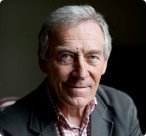 A journalist of fifty years standing offers a personal and independent assessment of the often troubled relationship between public figures and the British news media.
 Ed Miliband’s first set-piece speech since the worsening disagreement over trade union financing of the Labour Party – and then the House of Commons’ “no” vote to military action against Syria – is likely to dominate news coverage of the annual TUC conference in Bournemouth.
 No wonder there were complaints from Downing Street about the four national newspapers which printed photographs of the Prime Minister wrapped in a Mickey Mouse towel as he struggled to change out of his swimming trunks on a beach in Cornwall. As he and his wife Samantha had already provided a pre-arranged photo-opportunity earlier in week, the couple had assumed they would be left alone for the rest of their holiday.
 Reading the reviews of the one-man play, The Confessions of Gordon Brown, I had a sudden pang of conscience: Did I perhaps encourage the former Labour Prime Minister to follow a path which in some small way may have played a part in the ultimate defeat of a driven but tragic figure?
 When the News of the World phone hacking trial opens at the Old Bailey in early September, it will highlight one of the great taboos of British journalism. How much freedom – if any – should reporters have to pay for the information which they think they might need for their stories? And perhaps more importantly, should they be able to finance others to potentially break the law on their behalf?
 What Do We Mean By Local? The Rise, Fall and Possible Rise Again of Local Journalism, due to be published in September, reflects on the golden age of the provincial press and examines the future prospects for local newspapers and other local news outlets.