A journalist of fifty years standing offers a personal and independent assessment of the often troubled relationship between public figures and the British news media.
My aim is to try to monitor events and issues affecting the ethics of journalism and the latest developments in the rapidly-changing world of press, television, radio and the Internet.
Expect too an insight into the black arts of media manipulation. So spin-doctors, Beware!
Chris Huhne’s downfall had a thread running through it which connected him to the disgrace of a long-line of post-war politicians. In almost every case it was the work of journalists which was responsible for initially exposing their misdemeanours or sexual infidelities yet those involved seemed to have believed mistakenly that they could somehow outwit the ability of Britain’s national newspapers to hold the powerful to account.
Whether it was John Profumo, John Stonehouse, David Mellor, Jeffrey Archer, Jonathan Aitken or John Prescott, they had all learned how to use – and to even manipulate – the news media yet in the end they could not keep the journalists at bay.
Often because of their prominent positions in public life or their acquaintance with newspaper proprietors, editors and broadcasting executives, politicians believe they have established some kind of protection against the worst excesses of the tabloid press.
They tend to become overconfident; they sometimes make the mistake of threatening to go over the heads of reporters direct to the editor or worst of all, try to play one newspaper or news outlet off against another -- a sure fire way of encouraging Tony Blair’s “feral beasts” to take even greater risks.
Investigative journalism – across both the press and broadcasting – will almost certainly suffer as a result of the Leveson Inquiry and the introduction of a new regulatory regime. Most speakers at the launch of a new book – After Leveson? The future of British Journalism – feared the worst.
Perhaps the clearest warning of the obstacles that would be placed in the way of investigative journalism came from Dorothy Byrne, head of news and current affairs at Channel Four Television, who gave a vivid description of the way “multi-billion pound organisations and evil regimes” used “tiers of incredibly expensive lawyers” to thwart Channel Four’s investigations.
She said that any new regulatory regime for the press would be scrutinised by lawyers to find new ways to frustrate and curb newspaper investigations.
Her concern was echoed by Mick Hume of the Free Speech Network and the investigative journalist Paul Lashmar. But Evan Harris, Associate Director of Hacked Off, the group campaigning for the introduction of the Leveson recommendations, disagreed and insisted that Leveson had not proposed any alterations to the existing regulatory code of the Press Complaints Commission.
The future prospects for investigative journalism dominated much of the debate at the Media Society event to launch After Leveson? (26.2.2013)
The death at the age of 97 of the veteran BBC space and aviation correspondent Reginald Turnill is a timely reminder of a by-gone age in Fleet Street. Turnill, a fifteen year old school boy, joined the Press Association news agency in1930 as a reporter’s telephonist. After five years as a copytaker he was promoted to reporter – and seventy years later he was still just as busy writing and broadcasting.
I had the good fortune to come to know and respect Turnill at several points in my career: in the early 1960s, again in the 1980s and as recently as 2011 when he reflected on his days as an industrial correspondent with both the Press Association and the BBC and contributed to my book The Lost Tribe: WhateverHappened to Fleet Street’s Industrial Correspondents?
My first encounter with Turnill was in 1962 when, after seeing him at work as the BBC’s aviation correspondent, I decided that I too wanted to become a broadcaster. Two decades later he encouraged me in my own writing after reading articles I had written for The Listener. Turnill’s advice was invaluable: he told me to always keep my BBC scripts because they were a reliable source of information which could not be bettered by newspaper cuttings.
Turnill put his own advice to good use and his many articles and books on manned space flight and the development of aircraft such as Concorde are a testimony to the legendary accuracy of his reporting – an accuracy which had been instilled in him from his early years copy taking and performing the menial fact-checking tasks which were then demanded of reporters.
Like Turnill I was an early school leaver, starting out as a magazine editorial assistant at the age of 17; and just Turnill was forced by the BBC, against his will, to retire at the age of sixty, so too was I in 2002. In recent years I renewed my contact with Turnill at receptions organised by the Journalists' Charity, of which he was a long-standing member and of which I am a past chairman of the trustees.
I reproduce “Advice from Reg”, my contribution to a collection of tributes to some of the best-known names in journalism, which was published by The Journalist's Handbook in January 2002:
When faced by the cut and thrust of a noisy House of Commons chamber, cabinet ministers can find it difficult to execute a government U-turn without incurring political damage and a bruised reputation.
Michael Gove’s about turn over his plan to scrap the GCSE school exam system was billed in advance as a humiliating retreat. But the Secretary of State for Education managed to deliver a text book display of humility (7.2.2013) which took the sting out of what might otherwise have been a painful appearance before MPs.
Given the live transmission of parliamentary proceedings on radio, television and now the internet – and the inevitable trailing of most announcements in advance – political commentators and pundits have increasingly had to fall back on analysing the performance of a minister rather than the content of his or her statement.
Journalists are quick to rate an apology. Was it a trite “I’m sorry” with no indication of what precisely the minister was apologising for? Did a grudging, belligerent admission follow a previous attempt to “bury bad news?” Was the minister just passing the buck, blaming everyone else?
Corporate public relations executives for the likes of Starbucks, Amazon and Google are waiting anxiously to discover what fresh humiliation might be in store in the backlash which has followed the revelations about off-shore schemes used to limit their liability to UK corporation tax.
Ever since top directors suffered the indignity last November of being pilloried as tax avoiders at a hearing of the House of Commons Public Accounts Committee, the tax affairs of leading US multi-nationals have become a hot topic for debate.
An indication of the government’s course of action is unlikely before the Chancellor of the Exchequer George Osborne delivers his Budget next month (20.3.2013) but MPs have the ability to sustain their assault rather than rest of their laurels.
A chance encounter with Margaret Hodge, the fiery chairman of the House of Commons Public Accounts Committee, did not suggest the corporate pr world has much to be concerned about. To my surprise she seemed to be indicating that the committee had adopted a wait-and-see position rather than keeping up the momentum by recalling the directors for another parliamentary grilling.

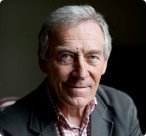 A journalist of fifty years standing offers a personal and independent assessment of the often troubled relationship between public figures and the British news media.
 Chris Huhne’s downfall had a thread running through it which connected him to the disgrace of a long-line of post-war politicians. In almost every case it was the work of journalists which was responsible for initially exposing their misdemeanours or sexual infidelities yet those involved seemed to have believed mistakenly that they could somehow outwit the ability of Britain’s national newspapers to hold the powerful to account.
 Investigative journalism – across both the press and broadcasting – will almost certainly suffer as a result of the Leveson Inquiry and the introduction of a new regulatory regime. Most speakers at the launch of a new book – After Leveson? The future of British Journalism – feared the worst.
 The death at the age of 97 of the veteran BBC space and aviation correspondent Reginald Turnill is a timely reminder of a by-gone age in Fleet Street. Turnill, a fifteen year old school boy, joined the Press Association news agency in1930 as a reporter’s telephonist. After five years as a copytaker he was promoted to reporter – and seventy years later he was still just as busy writing and broadcasting.
 When faced by the cut and thrust of a noisy House of Commons chamber, cabinet ministers can find it difficult to execute a government U-turn without incurring political damage and a bruised reputation.
  Corporate public relations executives for the likes of Starbucks, Amazon and Google are waiting anxiously to discover what fresh humiliation might be in store in the backlash which has followed the revelations about off-shore schemes used to limit their liability to UK corporation tax.