A journalist of fifty years standing offers a personal and independent assessment of the often troubled relationship between public figures and the British news media.
My aim is to try to monitor events and issues affecting the ethics of journalism and the latest developments in the rapidly-changing world of press, television, radio and the Internet.
Expect too an insight into the black arts of media manipulation. So spin-doctors, Beware!
When the news broke in June that the Greek public broadcaster ERT had been closed down, taken off the air, I found the justification of the Greek government provided an uncanny throwback to events in Britain.
Throughout the run-up to the 2010 general election, David Cameron, as leader of the Conservative Party, had been at the forefront of the demands to freeze the BBC licence fee.
Within three months of taking office, the coalition government formed by the Conservatives and Liberal Democrats had imposed a 20 per cent reduction in the BBC’s spending.
The Greek’s government’s official spokesman accused ERT of being “a haven of waste”. He said it had displayed “an exceptional lack of transparency” and had done nothing to end “incredible extravagance”.
Conservative politicians promoted a similar line when the Chancellor of the Exchequer George Osborne justified his October 2010 spending review which included a six-year freeze on the BBC’s licence fee, cutting the the BBC’s income by £1 billion a year by 2015.
Fleet Street and the BBC should realise that they had a stake in each other’s future and that by working alongside each other they could go on delivering some of the best journalism in the world.
James Harding, the BBC’s new director of news and current affairs, gave the Journalists’ Charity what he acknowledged was an unfashionable but unashamedly upbeat assessment of the future of British journalism.
He told the charity’s annual summer lunch (2.7.2013) that the BBC had a vital stake in the future of the press and in safeguarding press freedom.
Not only did Fleet Street provide a brilliant, boisterous expression of opinion but it also faced the critical challenge of helping to provide a constant a constant stream of ideas which sustained the journalism of the BBC.
“Within the BBC there is a constant hunger for fresh stories and opinions for which it relies on the papers and for its part the BBC acts as a fog horn for the great work of Fleet Street and it should credit newspapers and journalists for their reporting”.
When previously secretive spin doctors break a self-enforced vow of silence there is usually more than one political agenda at play and that certainly seems to be the case with the unexpected foray by Andy Coulson into the current uncertainties within the Conservative Party.
By firing a well-aimed broadside across the bows of Boris Johnson – accusing the Mayor of London of wanting to see David Cameron “fail miserably” in the 2015 general election – Coulson has more than repaid the respect which the Prime Minister has continued to show for his former Downing Street director of communications.
But why would Coulson, ex- editor of the defunct News of the World – who is due to stand trial in September over conspiracy allegations relating to the hacking of voice mails – choose this moment to come out into the public arena after spending so long in the political shadows.
Since his initial appointment as the Conservative Party’s top spin doctor in May 2007 (within months of his resignation from the News of the World), Coulson has rarely uttered a word in public about his behind-the-scenes role spinning for Cameron both in the run up to the 2010 general election and then during the first seven months of the coalition government.
In my own book Campaign 2010, I made the point that Coulson’s great value to Cameron was that unlike his infamous predecessor in Downing Street, Alastair Campbell, he was not addicted to self publicity; Coulson always kept the lowest possible profile, had no intention of becoming “the story” and did not get caught up in feeding the news media with speculative stories.
Therefore I have to admit I was taken aback by Coulson’s splash in the GQ magazine (July, 2013) in which he reveals his “ten point plan for saving David Cameron and stopping Labour in 2015.” Coulson’s choice of GQ is itself a deft touch, opting for a platform not known for its political commentary but seeing itself as an influential magazine with an aspiring readership.
Political journalists are sometimes accused of stretching a point when they try to argue that history is repeating itself. But the plight of David Cameron does have uncanny similarities with the fate of John Major almost twenty years ago.
Then as now the politics of the Conservative Party were being driven by the Tory Euro-sceptics’ demand for a referendum on Britain’s membership of the European Union.
Back in the 1990s, during the long haul to the general election of 1997 – and the Conservatives’ eventual wipe out – a political maverick was taunting the Prime Minister.
John Major’s bête noire was the billionaire Sir James Goldsmith who was funding the Referendum Party and paying for a splurge of posters and newspaper advertisements which promoted withdrawal from a federal Europe and called for Britain to return to a common trading market.
Two decades later the sceptics’ flag bearer is not an overbearing grandee but a larger-than-life Nigel Farrage, the bloke next door, only too happy to share a pint and explain why the United Kingdom should free itself from the clutches of the Brussels bureaucracy.
More importantly, UKIP – which back then was in its political infancy – is now a far deadlier threat than Goldsmith’s cheque book. Having been endowed with political stardust, Farrage has the ability, at least for the moment, to mobilise the floating voter, that Holy Grail for every party strategist.
Another hole-in-the-corner deal over press regulation has demonstrated yet again the ineptitude of Lord Justice Leveson in adopting a hands-off approach when he had an historic opportunity during his year-long inquiry to investigate potential collusion between politicians and media proprietors.
The conduit for the latest charade is the Privy Council – the age old institution which among its many roles is its use by ministers as a forum to help resolve conflicts of interest while keeping the state at arm’s length.
Discussions held on Privy Council terms are always off-the-record and such is the establishment’s reliance on a mechanism where negotiations can be conducted without incriminating finger prints that it was not even on the judge’s radar during his superficial examination of the culture of shadowy negotiations between the government of the day and the all-powerful media companies.
Therefore there seems to be little chance of discovering who said what to whom and when in the lead-up to the surprise withdrawal of the Royal Charter on press regulation which had previously been agreed by the political parties. Instead the go ahead was given for consideration of a rival Royal Charter prepared by the newspaper industry.
The decision to postpone approval of the original Royal Charter was made only days before it was due to have been rubber stamped by the Privy Council in mid May 2013.
That was certainly what “Downing Street” had been briefing until the last-minute change of heart by the Prime Minister following what were said to have been behind-the-scenes pressure from “senior Conservatives”; it was then revealed by “government sources” that arrangements had in fact been made for the Department of Culture, Media and Sport to put the industry’s alternative Royal Charter out for consultation..

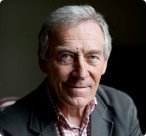 A journalist of fifty years standing offers a personal and independent assessment of the often troubled relationship between public figures and the British news media.
 When the news broke in June that the Greek public broadcaster ERT had been closed down, taken off the air, I found the justification of the Greek government provided an uncanny throwback to events in Britain.
 Fleet Street and the BBC should realise that they had a stake in each other’s future and that by working alongside each other they could go on delivering some of the best journalism in the world.
  When previously secretive spin doctors break a self-enforced vow of silence there is usually more than one political agenda at play and that certainly seems to be the case with the unexpected foray by Andy Coulson into the current uncertainties within the Conservative Party.
 Political journalists are sometimes accused of stretching a point when they try to argue that history is repeating itself. But the plight of David Cameron does have uncanny similarities with the fate of John Major almost twenty years ago.
  Another hole-in-the-corner deal over press regulation has demonstrated yet again the ineptitude of Lord Justice Leveson in adopting a hands-off approach when he had an historic opportunity during his year-long inquiry to investigate potential collusion between politicians and media proprietors.