A journalist of fifty years standing offers a personal and independent assessment of the often troubled relationship between public figures and the British news media.
My aim is to try to monitor events and issues affecting the ethics of journalism and the latest developments in the rapidly-changing world of press, television, radio and the Internet.
Expect too an insight into the black arts of media manipulation. So spin-doctors, Beware!
While Sir John Major seemed only too anxious to tell the Leveson Inquiry of Rupert Murdoch’s secret threat in 1997 to withdraw the support of his newspapers, the former Prime Minister managed to skate over the impact of the enthusiastic backing which he received from the Sun in the 1992 general election and the subsequent downfall of his government amid allegations of “Tory sleaze.”
Major could not be faulted on his demolition of Murdoch’s own assertion before Lord Justice Leveson that he had never asked any Prime Minister for a favour.
The former Premier recalled in his evidence (12.6.2012) a private dinner in February 1997, attended only by their two wives, at which Murdoch indicated he wanted see a change in policy on Europe. “If we couldn’t change our European policies his papers could not and would not support the Conservative government.”
Major was not surprised a month later when the front page of what he called Murdoch’s “house pet” announced that the Tories had been abandoned: “The Sun Backs Blair”. (Sun, 16.3.1997)
But Major’s memory seemed to be playing tricks when it came to his recollections of the 1992 general election. He maintained that although the press “were not necessarily hostile” to him, he had thought “all the way through” the election campaign that the Conservatives would win.
Yet again the Leveson Inquiry has failed to examine the nut and bolts of the political patronage which was exercised by the Murdoch press. When giving his evidence George Osborne – one of the key strategists in the Conservatives’ 2010 general election victory – was not challenged further after stating he “could not remember a specific strategy” by the Conservatives to seek the endorsement of the Sun newspaper.
Robert Jay QC, counsel for the inquiry, let Osborne’s answer pass without a single detailed supplementary question (11.6.2012). Jay made no mention of the signed articles and exclusive interviews given by the Conservative leader David Cameron in support of Sun campaigns.
Perhaps the most glaring omission of all was Jay’s failure to question Osborne on the pre-election support given by the Conservatives to the campaign in the Sun and the News of the World for a freeze in the BBC licence fee – a freeze which was duly delivered by the coalition government within months of the 2010 general election.
If Jay had taken the opportunity, he could have put Osborne’s answers to the test: there were repeated examples of campaigns waged the Sun and News of the World which were endorsed by Cameron and which were clearly the inspiration of the Conservatives’ spin doctor Andy Coulson,
Alastair Campbell has rarely missed an opportunity to launch a demolition job on journalism and in the second round of his evidence to the Leveson Inquiry he was given free rein to go back onto the attack: he claimed David Cameron, Nick Clegg and Ed Miliband were all getting “disproportionately whacked” by the press in retaliation for having given their backing to Lord Justice Leveson’s investigation into media ethics.
All three party leaders were in the frame because journalists were getting in their “revenge” on the Prime Minister for having set up the inquiry. Campbell felt the motivation for such hostile reporting should not be overlooked: he feared that deep down among politicians there was not much of an appetite to follow through any recommendations which the Leveson Inquiry might make for tightening up press regulation. Therefore adverse press coverage could become a critical factor.
“I would not rule out the possibility of politicians thinking about how this might affect their own position vis-à-vis the next election; there is some appetite for change but I would not overstate it.”
There was a danger that the judge and the politicians might conclude that the whole issue of media ethics was so complicated and changing so fast that nothing could be done. “Too many parliamentarians want to turn away from this...they want this to go away.”
As he listened to the unfolding argument Robert Jay QC seemed nonplussed both by Campbell’s performance and by his own reaction: here was the inquiry’s legal counsel allowing a noted spin doctor to accuse journalists of habitually spinning a line yet at the same time Jay almost seemed to be encouraging Campbell to spin away about his own conspiracy theory on the motivation for the way the news media were reporting the collapse in the public’s respect for politicians.
Having been disadvantaged so often by the ability of the Murdoch press to deliver politically-inspired exclusives, I found Rebekah Brooks’ testimony to the Leveson Inquiry a telling confirmation of what I and most other journalists had always suspected: the Sun and the News of the World had no scruples when it came to exploiting the privileged access which their editors enjoyed in return for the political endorsement of their papers.
Unless a Prime Minister or relevant minister was prepared to comply and give their backing to the latest editorial campaign, the story line could just as easily be turned against the government of the day. But surprisingly often – despite Rebekah Brooks’ denial that threats were ever made – the Sun and the News ofthe World succeeded in gaining precisely the ministerial support they were seeking.
Brooks was challenged repeatedly (11.5.2012) over the role she played behind the scenes in gaining government backing for a succession of campaigning initiatives – from the “Sarah’s law” campaign to identify paedophiles, to the sacking of Sharon Shoesmith over the “Baby P” affair and finally David Cameron’s decision to order the Metropolitan Police to re-open the files on the missing youngster Madeleine McCann.
Although the inquiry’s counsel Robert Jay QC failed to question Brooks on the impact of these manufactured story lines on the behaviour of the rest of the news media, she perhaps inadvertently gave the clearest possible exposition of why both Labour and Conservative spin doctors have always been so keen to adopt a policy of divide and rule when dealing with journalists.
David Cameron’s former spin doctor Andy Coulson gave an assured account of himself before the Leveson inquiry into press standards – he certainly avoided giving any incriminating answers about the way the coalition government dealt with News Corporation’s controversial bid for full control of BSkyB.
Coulson did admit that he when he became the Downing Street director of communications in May 2010 he overlooked mentioning his own potential conflict of interest – in holding News Corporation stock options worth £40,000 – but he insisted he had no involvement in discussions over the aborted take-over bid.
Unlike Rupert and James Murdoch when offering their evidence to the inquiry, Coulson avoided making comments or asides and he stood loyally by the Prime Minister (who had give him a “second chance”) and by the Chancellor of the Exchequer George Osborne who had recommended him for a job with the Conservative Party after his resignation from the editorship of the News of theWorld.
It seemed the harder Robert Jay QC, the inquiry counsel, tried to lead Coulson into offering fresh insights – even when backed up by Lord Justice Leveson – the easier it became for the former spin doctor to close down potentially incriminating lines of inquiry.
During an evidence session lasting for two and a half hours, Coulson’s repeated refrains were a variation of the same themes: “No, I don’t recall any discussions...I am not sure what I knew which day...No I don’t know what he was thinking...” and so it went on.

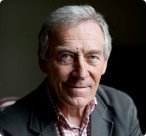 A journalist of fifty years standing offers a personal and independent assessment of the often troubled relationship between public figures and the British news media.
 While Sir John Major seemed only too anxious to tell the Leveson Inquiry of Rupert Murdoch’s secret threat in 1997 to withdraw the support of his newspapers, the former Prime Minister managed to skate over the impact of the enthusiastic backing which he received from the Sun in the 1992 general election and the subsequent downfall of his government amid allegations of “Tory sleaze.”
 Yet again the Leveson Inquiry has failed to examine the nut and bolts of the political patronage which was exercised by the Murdoch press. When giving his evidence George Osborne – one of the key strategists in the Conservatives’ 2010 general election victory – was not challenged further after stating he “could not remember a specific strategy” by the Conservatives to seek the endorsement of the Sun newspaper.
 Alastair Campbell has rarely missed an opportunity to launch a demolition job on journalism and in the second round of his evidence to the Leveson Inquiry he was given free rein to go back onto the attack: he claimed David Cameron, Nick Clegg and Ed Miliband were all getting “disproportionately whacked” by the press in retaliation for having given their backing to Lord Justice Leveson’s investigation into media ethics.
  Having been disadvantaged so often by the ability of the Murdoch press to deliver politically-inspired exclusives, I found Rebekah Brooks’ testimony to the Leveson Inquiry a telling confirmation of what I and most other journalists had always suspected: the Sun and the News of the World had no scruples when it came to exploiting the privileged access which their editors enjoyed in return for the political endorsement of their papers.
 David Cameron’s former spin doctor Andy Coulson gave an assured account of himself before the Leveson inquiry into press standards – he certainly avoided giving any incriminating answers about the way the coalition government dealt with News Corporation’s controversial bid for full control of BSkyB.