A journalist of fifty years standing offers a personal and independent assessment of the often troubled relationship between public figures and the British news media.
My aim is to try to monitor events and issues affecting the ethics of journalism and the latest developments in the rapidly-changing world of press, television, radio and the Internet.
Expect too an insight into the black arts of media manipulation. So spin-doctors, Beware!
Lynton Crosby’s appointment as David Cameron’s head of campaign strategy is the clearest signal yet that it will be “business as usual” when the Conservative Party tries again to manipulate the news agenda in the long lead-up to the 2015 general election.
Like his two most infamous fellow travellers – Alastair Campbell and Andy Coulson – Crosby has an innate understanding of the ups and downs of 24-hour news... and the ruthlessness that is needed to take on the British media.
Crosby shares with the two ACs – Campbell and Coulson – an ability to identify key election messages and then reinforce them relentlessly through press campaigns. All three have seemed to get a kick out of riding the tiger of the British news agenda.
At the age of fifty-five, Crosby is also one of the great survivors among political spin doctors having been dubbed the “Wizard of Oz” for his success in helping to pull off four election victories for the Australian Prime Minister John Howard between 1996 and 2007.
His one set back in the UK, his failure to pilot Michael Howard to victory for the Conservatives in the 2005 general election, was followed by his double whammy of success in the London Mayoral elections running Boris Johnson’s 2008 campaign and then his re-election in 2012.
While many journalists were understandably fearful that the outcome of the Leveson Inquiry might be used as “payback time” by politicians, the Deputy Prime Minister Nick Clegg struck a helpful note at the Journalists’ Charity’s annual reception at the Embassy of Ireland (7.11.2012).
In thanking him for his support, the charity’s chairman Bill Hagerty said Mr Clegg was the first journalist turned politician to become Deputy Prime Minister and it was gratifying to hear him sounding positive about his former profession.
Mr Clegg was warmly welcomed by the Ambassador of Ireland Mr Bobby McDonagh who said a meeting later in the week in Dublin (9.11.2012) between the Deputy Prime Minister and his opposite number was a further illustration of the close relationship between the British and Irish governments.
But pleasantries aside there was no hiding the reality of the moment: journalism was at crossroads and, as the chairman remarked, journalists were not all sleeping easily as the Leveson Report loomed. Mr Clegg said he recognised it was a time of heightened interest in the interaction between the press and society in the wake of recent scandals which had shaken politics and the news media.
In a news provider like the BBC, where story lines are constantly being changed and updated, journalists and editors have to trust each other. There is what amounts to an umbilical cord of trust between a reporter out on assignment and those executives who have editorial control over what is broadcast in news bulletins and programmes.
Sometimes that sense of trust gets eroded; perhaps the journalist senses that the editor no longer approves of the story line which is being pursued.
If there is a serious misunderstanding the umbilical cord might be broken altogether. Very occasionally – as I know from thirty years as a BBC correspondent – that breakdown in relations might have been due to what I can only describe as a hidden agenda on the part of the BBC’s management.
When it comes to the dropping of Newsnight’s investigation into the allegations of child abuse against the late disc jockey Sir Jimmy Saville, the suspicion is that the story was dropped for corporate reasons: the BBC did not want to jeopardise its pre-Christmas tribute programmes to such a well-known celebrity.
It is the manoeuvring within the BBC’s editorial chain of command – which was going on without the knowledge of Newsnight’s reporter Liz MacKean and producer Merion Jones – which makes the Savile saga so dangerous for the BBC.
Let me start with a question. Do the annual party conferences serve a useful purpose? Yes they do. And I’ll explain why. But their impact on the democratic process is nothing like it once was. The reason is simple: presentation now takes precedence over policy.
Instead of being the forum which used to have a significant role in determining the polices a party might adopt, the conferences have now become a showcase at which to present the party and its leadership in the best possible light, more like an American political convention.
Labour Party conferences once played a vital role in influencing issues like taxation, employment law or long-running controversies such as nuclear disarmament. Conservative and Liberal Democrat conferences also made a significant contribution to their decision-making processes but today they’re more about news management than giving the membership a say in deciding what the policies will be.
While reshuffles are often an unpleasant ordeal for the cabinet members who have lost their jobs those ministers who have been sacked no longer face the humiliation of having to run the gauntlet of television cameras in Downing Street in order to get their marching orders from the Prime Minister of the day.
Losers in the first shake-up of the coalition government were told of their fate by David Cameron in the privacy of the Prime Minister’s rooms in the House of Commons.
He learned at first hand as a 26-year-old political adviser the brutality of a badly-managed reshuffle and was keen that the first ministerial casualties of his administration were shielded from the kind of public pain suffered by his ex boss the former Chancellor of the Exchequer Norman Lamont who was dumped by John Major in the cabinet clear out of May 1993.
Lamont was summoned from No. 11 to No. 10 to be told the news just after 10am – he refused to accept Major’s counter offer of a switch to the Department of the Environment – but he was left hanging out to dry for the rest of the day with only Cameron to keep him company.

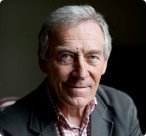 A journalist of fifty years standing offers a personal and independent assessment of the often troubled relationship between public figures and the British news media.
 Lynton Crosby’s appointment as David Cameron’s head of campaign strategy is the clearest signal yet that it will be “business as usual” when the Conservative Party tries again to manipulate the news agenda in the long lead-up to the 2015 general election.
 While many journalists were understandably fearful that the outcome of the Leveson Inquiry might be used as “payback time” by politicians, the Deputy Prime Minister Nick Clegg struck a helpful note at the Journalists’ Charity’s annual reception at the Embassy of Ireland (7.11.2012).
 In a news provider like the BBC, where story lines are constantly being changed and updated, journalists and editors have to trust each other. There is what amounts to an umbilical cord of trust between a reporter out on assignment and those executives who have editorial control over what is broadcast in news bulletins and programmes.
 Let me start with a question. Do the annual party conferences serve a useful purpose? Yes they do. And I’ll explain why. But their impact on the democratic process is nothing like it once was. The reason is simple: presentation now takes precedence over policy.
  While reshuffles are often an unpleasant ordeal for the cabinet members who have lost their jobs those ministers who have been sacked no longer face the humiliation of having to run the gauntlet of television cameras in Downing Street in order to get their marching orders from the Prime Minister of the day.