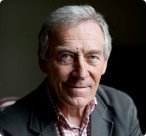
A journalist of fifty years standing offers a personal and independent assessment of the often troubled relationship between public figures and the British news media.
My aim is to try to monitor events and issues affecting the ethics of journalism and the latest developments in the rapidly-changing world of press, television, radio and the Internet.
Expect too an insight into the black arts of media manipulation. So spin-doctors, Beware!
Margaret Thatcher must have finally got the measure of Arthur Scargill’s intransigence over pit closures when she read the management’s internal account of the first futile negotiations between the National Union of Mineworkers and the National Coal Board.
Her 1984 cabinet papers include a heavily underlined account of Scargill’s dramatic standoff with the NCB chairman Ian MacGregor eleven weeks into the year-long pit strike.
After the collapse of the talks, held on 23 May 1984, there was an immediate hardening in the advice being given to Mrs Thatcher; she was informed there was no chance of settlement with “a fanatic like Scargill”.
A week later, after the miners’ president had been arrested for obstruction during the Battle of Orgreave, the Secretary of State for Energy Peter Walker told Thatcher “Scargill was aiming at mob rule.”
The previous week Scargill had emerged from the NCB’s headquarters to tell waiting reporters the first round of talks over MacGregor’s demand for the closure of 20 pits with the loss of 20,000 jobs had been “a complete fiasco.”
Carols at St Bride’s Church, just off Fleet Street, never fail to provide a much-loved festive curtain raiser for the Journalists’ Charity.
This year’s service was all the more memorable because it was the fourteenth – and the last – to be conducted by the Venerable David Meara who has been unstinting in his support for journalists in need.
From the Vicar of Fleet Street as he has become known, there were words of comfort for journalists and their families facing troubled times and encouragement for those under pressure from news deadlines and schedules or working away from home.
As in previous years St Bride’s was packed for one of the charity’s most popular events (16.12.2013) which was hosted once again by the communications consultancy Luther Pendragon.
Senior figures from print and broadcasting gave the readings. The first three were by Eleanor Mills, editorial director of The Sunday Times, Ian King, business and city editor of The Times, and Sue Peart, editor of the Mail onSunday’s YOU magazine.
As the prosecution continues to present its evidence at the Old Bailey in the case alleging phone hacking and the bribing of public officials, it is becoming increasingly clear that not only is British justice on trial but also journalism itself.
Repeated references have been made to the payments which it is alleged were made to sources who supplied information to the Sun and the News of theWorld.
Paying cash to get facts to support a reporter’s story line is a practice which splits journalistic opinion.
Indeed there could hardly be a clearer dividing line: some reporters are prepared to pay for information and justify their conduct on the grounds that sometimes this may be the only way to stand up stories which are in the public interest.
But on the other hand there are those journalists who say they have never offered money to informants -- and never would – and who insist they would always try to rely on journalistic endeavour rather than cash or the cheque book.
Once the Queen had placed her seal of approval on the politically-approved version of the royal charter for press regulation there must have been a collective sigh of relief among the three party leaders.
Almost by a whisker they had ensured that radio and television reports of the opening of the prosecution’s case in the phone hacking trial would be balanced by the news that the politicians had delivered on their promise to respond to the Leveson Inquiry.
But the Privy Council’s rendezvous with Queen at Buckingham Palace was nothing more than an empty gesture dressed up in the guise of some pretty clumsy news management.
When it came to influencing the headlines – and that is what it was all about – the message from the leadership of the three main parties was pretty clear: “We’ve proved we can stand up to the press on behalf of the public. We’ve done our bit.”
Yet in reality the political leaders know they are simply treading water. The ball remains very firmly in the hands of newspaper and magazine proprietors who will carry on regardless in establishing their Leveson-style regulator, the Independent Press Standards Organisation.
While the Daily Mail’s editor Paul Dacre continues to lick his wounds after a mauling at the hands of what he derides as the “Twitter mob”, his headline writers have had no alternative but to accept the power of social media.
Britain’s national newspapers are finding that the tone and direction of their news content is being influenced increasingly by online insurgencies which instantly reveal a level of public reaction which cannot be ignored.
When defending the Mail’s now infamous headline, “The man who hated Britain” in the row over the attack on the politics of Ed Miliband’s father, Dacre raged against what he said was “the phoney world of Twitter.”
In his opinion the hysteria that had been generated against the Mail’s commentary showed how any newspaper which dared to “take on the left in the interests of its readers risks being howled down by the Twitter mob, which the BBC absurdly thinks represents the views of real Britain.”
But within days of the editor’s denunciation of the power and influence of the Twitterati the Daily Mail was trumpeting the “Twitter firestorm” which had subjected British Gas to “an hour of non-stop abuse” for having imposed a 9.3 per cent increase in gas and electricity prices.

 A journalist of fifty years standing offers a personal and independent assessment of the often troubled relationship between public figures and the British news media.
 Margaret Thatcher must have finally got the measure of Arthur Scargill’s intransigence over pit closures when she read the management’s internal account of the first futile negotiations between the National Union of Mineworkers and the National Coal Board.
 Carols at St Bride’s Church, just off Fleet Street, never fail to provide a much-loved festive curtain raiser for the Journalists’ Charity.
 As the prosecution continues to present its evidence at the Old Bailey in the case alleging phone hacking and the bribing of public officials, it is becoming increasingly clear that not only is British justice on trial but also journalism itself.
 Once the Queen had placed her seal of approval on the politically-approved version of the royal charter for press regulation there must have been a collective sigh of relief among the three party leaders.
 While the Daily Mail’s editor Paul Dacre continues to lick his wounds after a mauling at the hands of what he derides as the “Twitter mob”, his headline writers have had no alternative but to accept the power of social media.