A journalist of fifty years standing offers a personal and independent assessment of the often troubled relationship between public figures and the British news media.
My aim is to try to monitor events and issues affecting the ethics of journalism and the latest developments in the rapidly-changing world of press, television, radio and the Internet.
Expect too an insight into the black arts of media manipulation. So spin-doctors, Beware!
Despite seven hours of questioning at the Leveson Inquiry – and his abject apologies for the phone hacking scandal at the News of the World – Rupert Murdoch was not challenged directly over the reasons for the “culture of illegal payments” which the Metropolitan Police have alleged became a regular practice among some journalists at the Sun.
Murdoch was clearly troubled by the recent arrests of Sun journalists – “great journalists, friends of mine” who had been with the paper for twenty to thirty years; and he explained at length the steps News Corporation had taken at considerable cost to introduce new ethical procedures. (26.4.2012)
But although counsel for the inquiry, Robert Jay QC – and Lord Justice Leveson himself – asked repeatedly about the culture which tolerated illegal phone hacking at the News of World – and then covered it up as Murdoch claimed – there were no follow up questions about Scotland Yard’s allegation that authorisation had been given at a senior level in the Sun for the payments of “regular, frequent and sometimes significant sums of money” to police and public officials.
Yet the Sun was the newspaper which Murdoch said mirrored his views and he insisted that the company’s new editorial standards demonstrated that it was still possible to produce the Sun – the “best newspaper” in Britain – without the bad practices which had previously been disclosed.
It has been a wait of nigh on thirty years to hear a chapter and verse explanation of the unprecedented access which Rupert Murdoch has enjoyed with successive with Prime Ministers as he shamelessly exploited the pages of the Sun to influence the course of British politics.
But time again as Murdoch was confronted at the Leveson Inquiry (25.4.2012) with entries from an engagement diary and telephone log which stretched back as far as a hitherto secret lunch at Chequers with Margaret Thatcher in 1981 Murdoch denied the recollections of those involved and their interpretation of events.
He was adamant that he had never used the Sun – or any of his other newspapers – to further his commercial interests.
Robert Jay QC was left floundering as he struggled to persuade Murdoch to accept that there must have been a pay-off for the Sun’s endorsement during general election campaigns; and that even if there was no empirical basis for thinking there was a quid pro quo that was at least the perception and the influence of the Murdoch press had distorted the democratic process.
Murdoch smiled enigmatically at Jay’s life line: “Yes that perception irritates me...because I think it is a myth. Everything I do every day proves it is a myth.”
Rupert Murdoch asked to see Harold Wilson in Downing Street in January 1976 to seek a relaxation of the Labour government's pay policy...just one of the private conversations which Murdoch held over the last four decades with Prime Ministers of the day.
Hitherto secret meetings which have now been revealed in the wake of the Leveson Inquiry include not only the meeting with Wilson but also a lunch at Chequers with Margaret Thatcher in January 1981 to discuss his bid to buy Times Newspapers and a second previously undisclosed meeting between David Cameron and Murdoch after News Corporation made its aborted bid to take full control of BSkyB.
What is not in doubt is that Murdoch’s diary of engagements and telephone conversations with successive British Prime Ministers would – if it could be obtained – make a prize exhibit at the Leveson Inquiry.
As yet more details emerge of Murdoch’s covert discussions over both the ownership and operation of his media companies the greater becomes the necessity for Lord Justice Leveson to draw lessons from the collusion of the past to produce a framework of safeguards for the future.
Scrapbooks, letters and other personal papers belonging to the late Clement Jones, former editor of the Express and Star, are being donated by Nicholas Jones to Wolverhampton Archives. The collection reveals how seventy years ago the challenge of reporting events in war-torn Bilston by a conscientious objector helped launch the career of a celebrated Wolverhampton journalist. His reports of the famous war-time parliamentary by-election in Bilston in September 1944 attracted the attention of Lord Beaverbrook - but Jones turned down the offer of a job on the Daily Express
Bilston in the mid 1940s was unquestionably at the heart of the Black Country: smoke particles were falling at the rate of nearly 1,400 tons per year per square mile over the whole town.
This was just one of the telling war-time statistics unearthed by my father Clement Jones, then an idealistic young journalist, who became the Express and Star’s Bilston reporter in June 1943 and whose reports highlighted what must have been some of the worst living conditions in the West Midlands
The pall of smoke from steel works and factories was so bad – and prevailing winds deposited so much soot, dust and grime on nearby houses – that Bilston became the setting in May 1944 for what Jones reported was a “unique” investigation into atmospheric pollution and the most comprehensive survey of its kind conducted anywhere in the country.
Gauges and dishes were placed around the town. Deposits were collected every two days and by using six different instruments Bilston’s salvage officer Eric Sheldon was able to weigh them to an accuracy of one-tenth of a milligramme.
Jones described how any local housewife would have agreed immediately that the air of Bilston was dirty: if she went to the best room in the house she would be able to “draw her finger over the polished surfaces to show the grime and dust deposited from the air.”
Newspaper editors are being urged by the shadow culture secretary Harriet Harman to stop being so defensive and instead “lay their cards on the table” by revealing precisely what mechanism they would accept for handling complaints against the press and for providing the public with a right of redress.
Ms Harman is calling on the government to be equally forthright in taking steps at once to impose new restraints on media ownership to ensure that proprietors face a “fit and proper person” test before the regulator Ofcom considers any future take-over bids.
Her pleas for immediate action were echoed by speakers supporting the Campaign for Press and Broadcasting Campaign at an all day conference – Taking on the Media Barons – which was held in London at the headquarters of the Trades Union Congress (17.3.2012).
Several groups, including the CPBF and the Co-ordinating Committee for Media Reform, urged the mobilisation of a concerted campaign to secure a 15 per cent cap on the future market share to be held by any media proprietor.
Earlier, in opening the conference, Ms Harman indicated that Labour preferred to await the outcome of both the Leveson Inquiry and an Ofcom review before taking a view on the future balance of media ownership but she made it clear the party leadership was determined to secure far lower limits and a sizeable reduction in Rupert Murdoch’s holdings in press and television.
Ms Harman told the conference she could not ignore the Labour Party’s own “political baggage” when it came to considering the relationship between ministers and News International – and as the day progressed speakers reminded the conference time and again of the often covert concessions agreed by Prime Ministers Margaret Thatcher and Tony Blair to appease the Murdoch press.

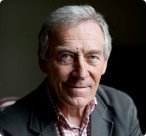 A journalist of fifty years standing offers a personal and independent assessment of the often troubled relationship between public figures and the British news media.
 Despite seven hours of questioning at the Leveson Inquiry – and his abject apologies for the phone hacking scandal at the News of the World – Rupert Murdoch was not challenged directly over the reasons for the “culture of illegal payments” which the Metropolitan Police have alleged became a regular practice among some journalists at the Sun.
 It has been a wait of nigh on thirty years to hear a chapter and verse explanation of the unprecedented access which Rupert Murdoch has enjoyed with successive with Prime Ministers as he shamelessly exploited the pages of the Sun to influence the course of British politics.
 Rupert Murdoch asked to see Harold Wilson in Downing Street in January 1976 to seek a relaxation of the Labour government's pay policy...just one of the private conversations which Murdoch held over the last four decades with Prime Ministers of the day.
 Scrapbooks, letters and other personal papers belonging to the late Clement Jones, former editor of the Express and Star, are being donated by Nicholas Jones to Wolverhampton Archives. The collection reveals how seventy years ago the challenge of reporting events in war-torn Bilston by a conscientious objector helped launch the career of a celebrated Wolverhampton journalist. His reports of the famous war-time parliamentary by-election in Bilston in September 1944 attracted the attention of Lord Beaverbrook - but Jones turned down the offer of a job on the Daily Express
  Newspaper editors are being urged by the shadow culture secretary Harriet Harman to stop being so defensive and instead “lay their cards on the table” by revealing precisely what mechanism they would accept for handling complaints against the press and for providing the public with a right of redress.