A journalist of fifty years standing offers a personal and independent assessment of the often troubled relationship between public figures and the British news media.
My aim is to try to monitor events and issues affecting the ethics of journalism and the latest developments in the rapidly-changing world of press, television, radio and the Internet.
Expect too an insight into the black arts of media manipulation. So spin-doctors, Beware!
Tucked away in a personal archive from thirty years of Rupert Murdoch watching was a dusty file dated May 1991 which told the tale of an ill-fated bid to expose the Sun’s malpractices. Perhaps it was no more than a mere footnote in the troubled history of Murdoch’s malign influence on British journalism but it was nonetheless a salutary reminder of the political power wielded by his newspapers.
As successive witnesses were questioned during the many months of the Leveson Inquiry, the judge and his legal counsel seemed to be working on the flawed narrative that it was Tony Blair who began the Labour Party’s overtures to win the support of the Murdoch press.
But the first tentative steps to establish a working relationship with the Sun began under Neil Kinnock’s leadership in the long lead up to the 1992 general election and, as I found to my cost, the behind-the-scenes manoeuvring of Kinnock’s inner circle would later become a template for Blair and ultimately for David Cameron.
Such was the chilling effect of Murdoch’s influence that Kinnock’s advisers had been making secret overtures long before polling day; their fear was so great that they were prepared to disregard the unethical and potentially illegal behaviour of the Sun if that was the only means of closing down damaging smear stories.
Although I am sure it was against their better judgement, Kinnock’s aides were being pushed relentlessly towards trying to reach an accommodation with the Murdoch press, an acquiescence which would come to haunt their successors.
By allowing a newsroom culture to develop at the Sun and the News of the World which gave reporters the freedom to pay cash for unauthorised disclosures Rupert Murdoch opened the floodgates to the sale of dubious information to tabloid newspapers.
More than any other group the Murdoch press was responsible for fostering an expectation on the part of the British public that money can be made from the trade in private data, personal records, unauthorised tip-offs and the like.
As the number of arrests has continued to mount during the summer – especially for the alleged bribery and corruption of police and public officials – Lord Justice Leveson has insisted that his inquiry into media ethics must be fully briefed before completing its report in the autumn.
Deputy Assistant Commissioner Sue Akers has been asked to provide a full update at a special hearing in September. If looked at solely on the basis of the number of arrests, the phone hacking investigation is now being rapidly overtaken by what the judge concedes are the two other “fast moving” inquiries which began once potentially incriminating evidence started being hand over to the Metropolitan Police by News International.
Rupert Murdoch’s step-by-step retreat from his UK media interests has often been followed by yet more damning evidence about the extent of phone hacking and the alleged bribery of police and public officials. And so it was with the news that Murdoch was finally quitting as a director of his British newspapers: the announcement pre-empted another grim day at the Leveson Inquiry.
An update on the unparalleled inquiries into unlawful journalistic practices revealed that the investigation by the Metropolitan Police continues to break new ground.
Among the latest to be arrested for taking illegal payments from journalists were two officers at high security prisons; the newspapers involved were not only those of News International but also Trinity Mirror and Express Newspapers; and some of the illicit information obtained by News International’s journalists had been downloaded from stolen mobile phones.
Lord Justice Leveson was so concerned by the fast-moving nature of the criminal investigation that he asked Deputy Assistant Commissioner Sue Akers to give him a further update in September so that his report, due out in the autumn, would be based on the latest information regarding arrests and possible prosecutions.
Donating my father’s papers to Wolverhampton Archives was a sobering experience. Tucked away inside voluminous scrapbooks from the 1940s was a letter of dismissal for a failure to carry out his “journalistic duties”. But a refusal to write stories in support of the war effort was a principled stand that would have to be reversed...
------------------------
A reporter having to struggle with his or her conscience is not the kind of story line likely to win much public sympathy at a time when the headlines have been dominated for so long by allegations of phone hacking and the bribing of police officers. Journalists do get sacked because of their convictions but examples among my generation seem few and far between. Indeed I freely admit that during my fifty years as a reporter I cannot remember having such strong feelings on an issue that I felt the need to stand up and be counted in support of my beliefs.
Having had no experience of the inner turmoil which might have resulted if I had ever put my job on the line, I felt increasingly inadequate as I read and re-read correspondence tucked away in long-forgotten family scrapbooks.
Six months after the start of the Second World War, my father Clement Jones wrote a letter accusing his editor of “a violation of principle” for having assigned him to report events being held to raise morale of the troops and boost arms production.
As with many of those who saw active service but were subsequently reluctant to discuss their front-line experiences, so it was with my father; he died without ever describing what it must have been like to get sacked, become a conscientious objector and then within two years be forced by dint of family hardship to have to put his pacifist beliefs to one side and return to war-time news reporting.
David Cameron’s spin was straight from the pages of the New Labour text book on media manipulation: the Sun switched its support to the Conservatives ahead of the 2010 general election because its readers had already started abandoning Gordon Brown – precisely the same argument advanced by Tony Blair who claimed that the Sun switched to Labour ahead of the 1997 general election because its readers were already deserting John Major.
Like Blair before him, Cameron was giving a spin doctor’s gloss on the “chicken and the egg”: their spin was that Rupert Murdoch had no alternative but to respond to what the Sun’s readers were telling the editor and the switch would have taken place anyway, without the help of Andy Coulson – or in Blair’s case, without the efforts of Peter Mandelson and Alastair Campbell.
In Cameron’s case it wasn’t only readers but also the reporters who forced the pace on Murdoch: “You could see what was happening under my leadership of the Conservative party. Sun readers were coming over to the Conservative Party and Sun journalists told me they thought their newspaper was out of tune with its readers.”
Although Cameron agreed in response to Robert Jay QC, counsel for the inquiry (14.6.2012), that Andy Coulson had given advice on how to win over the Sun the Prime Minister insisted that was not the reason why he was appointed the Conservative Party’s director of communications in May 2007.
Regrettably Jay did not pursue the point and Cameron was not pressed on Coulson’s role in the three years leading up to the 2010 general election and his success in reconnecting the Conservatives to the news agenda of the Sun and the News of the World.

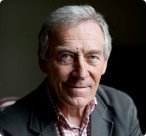 A journalist of fifty years standing offers a personal and independent assessment of the often troubled relationship between public figures and the British news media.
 Tucked away in a personal archive from thirty years of Rupert Murdoch watching was a dusty file dated May 1991 which told the tale of an ill-fated bid to expose the Sun’s malpractices. Perhaps it was no more than a mere footnote in the troubled history of Murdoch’s malign influence on British journalism but it was nonetheless a salutary reminder of the political power wielded by his newspapers.
 By allowing a newsroom culture to develop at the Sun and the News of the World which gave reporters the freedom to pay cash for unauthorised disclosures Rupert Murdoch opened the floodgates to the sale of dubious information to tabloid newspapers.
  Rupert Murdoch’s step-by-step retreat from his UK media interests has often been followed by yet more damning evidence about the extent of phone hacking and the alleged bribery of police and public officials. And so it was with the news that Murdoch was finally quitting as a director of his British newspapers: the announcement pre-empted another grim day at the Leveson Inquiry.
 Donating my father’s papers to Wolverhampton Archives was a sobering experience. Tucked away inside voluminous scrapbooks from the 1940s was a letter of dismissal for a failure to carry out his “journalistic duties”. But a refusal to write stories in support of the war effort was a principled stand that would have to be reversed...
 David Cameron’s spin was straight from the pages of the New Labour text book on media manipulation: the Sun switched its support to the Conservatives ahead of the 2010 general election because its readers had already started abandoning Gordon Brown – precisely the same argument advanced by Tony Blair who claimed that the Sun switched to Labour ahead of the 1997 general election because its readers were already deserting John Major.